Building Identity
2026.06.24
What Québec and Canada's Architectural Heritage Can Teach Us About Endurance
As Saint-Jean-Baptiste Day and Canada Day approach, we are reminded that culture is expressed in many ways. Through language, traditions, stories and landscapes, communities shape a collective identity that evolves over generations. Yet one of the most tangible expressions of this identity is found in the places we build and inhabit.
Across Québec and Canada, architecture tells the story of communities shaped by climate, geography, available resources and shared values. From rural homes and places of worship to civic institutions and cultural landmarks, our built environment bears witness to the people, traditions and aspirations that have shaped our society.
As architects, we often look to the future. Yet the lessons embedded in our architectural heritage remain profoundly relevant today. Vernacular architecture, heritage buildings and culturally significant places remind us that durability is both material and cultural. Buildings endure when communities recognize themselves in them.
Architecture as an Expression of Identity
The built environment plays an important role in shaping our sense of place and belonging. Across Québec, familiar architectural forms have emerged through generations of adaptation to local realities. Steeply pitched roofs, durable materials and simple building forms evolved in response to climate, craftsmanship and available resources, gradually becoming part of the region's architectural identity.
These forms continue to influence contemporary architecture today. At Résidence Thibaut, the familiar silhouette of the sloped roof is reinterpreted through a contemporary lens, drawing inspiration from the archetypal forms that have long characterized Québec's residential landscape. The project demonstrates how architecture can remain rooted in local traditions while responding to present-day needs.
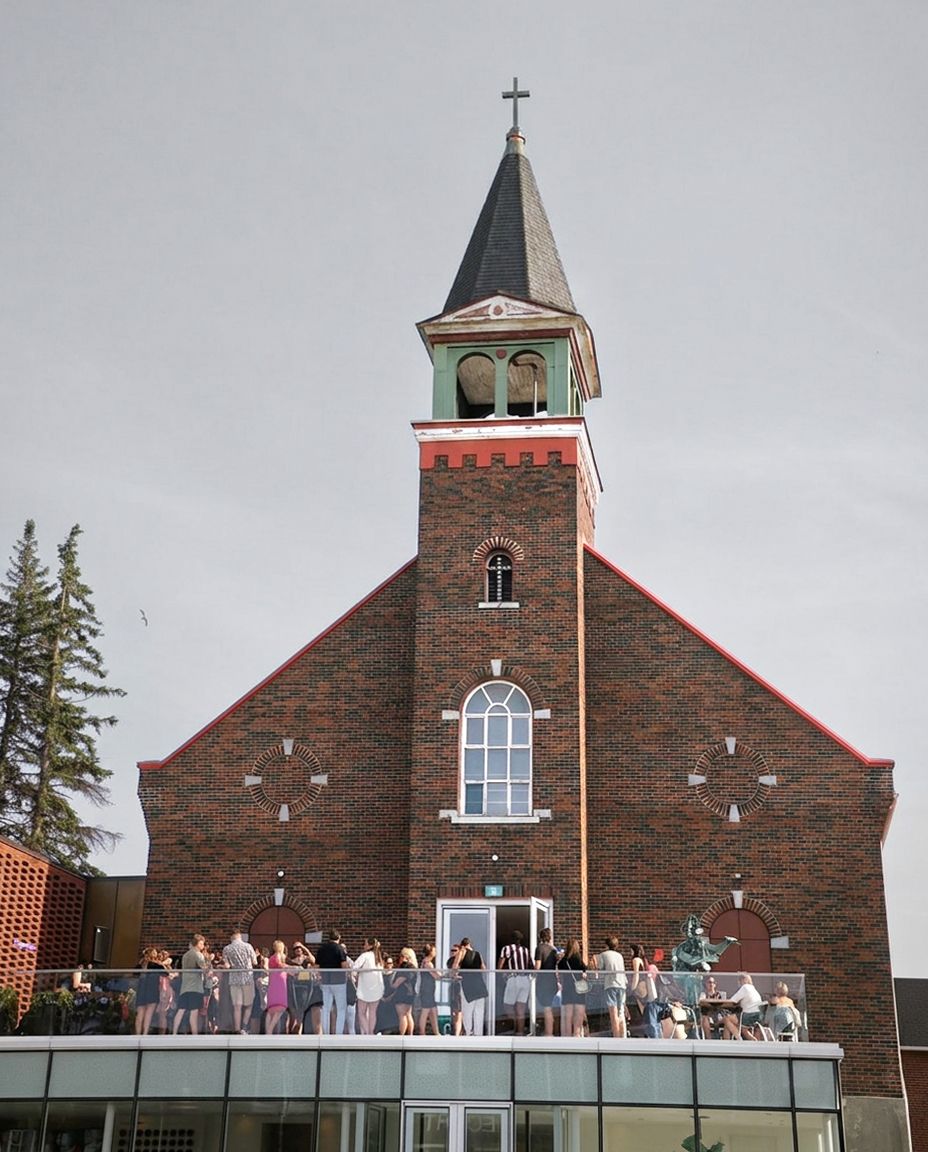
This dialogue between past and present is equally present in the transformation of le théâtre insolite des Sages Fous in Trois-Rivières. Occupying the historic Saint-James Church and presbytery, a site whose history spans nearly three centuries, the project continues a longstanding tradition of adaptation and occupation.
Throughout its existence, the complex has welcomed a succession of uses, serving as a place of worship, hospital, courthouse and prison before becoming home to the renowned theatre company. Its continued evolution illustrates how heritage buildings remain relevant when they are allowed to evolve alongside the communities they serve.
Similarly, 230 Notre-Dame Ouest engages directly with the historic urban fabric of Old Montréal. Situated within one of the city's most emblematic districts, the project contributes to the ongoing evolution of a place deeply embedded in Montréal's collective identity. Together, these projects illustrate how architecture participates in a continuous cultural conversation, connecting contemporary life to the stories and places that came before.
Building with the Intelligence of Place
Vernacular architecture emerged through a close relationship with place. Long before sustainability became a design objective, communities built with a deep understanding of local climates, landscapes and resources. Construction methods evolved through generations of practical knowledge, creating buildings that responded naturally to their environment while reflecting the realities of those who inhabited them.
Today, these lessons remain relevant. As architects seek more sustainable and resilient approaches to design, the principles embedded in vernacular traditions continue to offer valuable insight. Building responsibly requires understanding not only where we build, but also the cultural, environmental and material realities that define a place.
This reflection is central to the Mont-Laurier Library. Located in the heart of the Laurentides region, the project draws inspiration from the forestry heritage that shaped the development of the region. Its innovative reciprocal timber structure, a first for an institutional building in Québec and Canada, showcases the potential of wood while celebrating the ingenuity, resources and craftsmanship that have long defined the Hautes-Laurentides. Here, wood becomes a vehicle for expressing local identity and collective heritage.
TheKebaowek First Nation Cultural Centre offers another example of architecture rooted in place. Designed in collaboration with Formline Architecture, the project reflects the Anishinaabe Nation's enduring relationship with Lake Kipawa and its ancestral territory. The cultural centre is conceived as a place of gathering, knowledge-sharing and renewal. Through its use of local resources, sustainable strategies and culturally meaningful design, the project demonstrates how architecture can support both environmental stewardship and cultural revitalization.
Although distinct in their contexts, these projects share a common understanding that architecture is most resilient when it emerges from a deep engagement with territory, resources and community.
Buildings Endure When Communities Recognize Themselves in Them
Durability is often discussed in terms of materials, structure or technical performance. Yet some of the most enduring buildings owe their longevity to something less tangible: their place within a community's collective memory.
Throughout Québec and Canada, many heritage buildings have survived not because they remained unchanged, but because communities found new ways to inhabit, reinterpret and care for them over time. Architecture becomes lasting when it remains meaningful. When people gather and celebrate within it and recognize it as part of their shared story.
The Agora des Arts in Rouyn-Noranda embodies this idea. Through the rehabilitation and transformation of the historic Notre-Dame-de-Protection Church, the project preserves the symbolic significance of a landmark that served as a gathering place for nearly a century. While its function has evolved, its role within the community remains remarkably consistent: bringing people together.
Today, the Agora des Arts serves as a vibrant centre for theatre, music and artistic expression in Abitibi-Témiscamingue. The project carefully balances preservation and transformation, honouring the building's religious heritage while creating opportunities for new experiences, memories and connections to emerge. In doing so, it demonstrates that heritage is not simply something we conserve, but something we can actively carry forward.
As architects, our responsibility extends beyond designing buildings that perform well technically. We also contribute to shaping the places where collective life unfolds. Whether through preservation, transformation or new construction, architecture has the power to strengthen a community's sense of belonging and contribute to the cultural legacy passed from one generation to the next.
As we celebrate Saint-Jean-Baptiste Day and Canada Day, we are reminded that our built environment is one of the most enduring expressions of our collective identity. It reflects who we are, emerges from the places we inhabit and continues to evolve through the communities that give it meaning.