Social Housing: Architecture as a Driver of Equity, Sustainability, and Dignity
2026.01.29
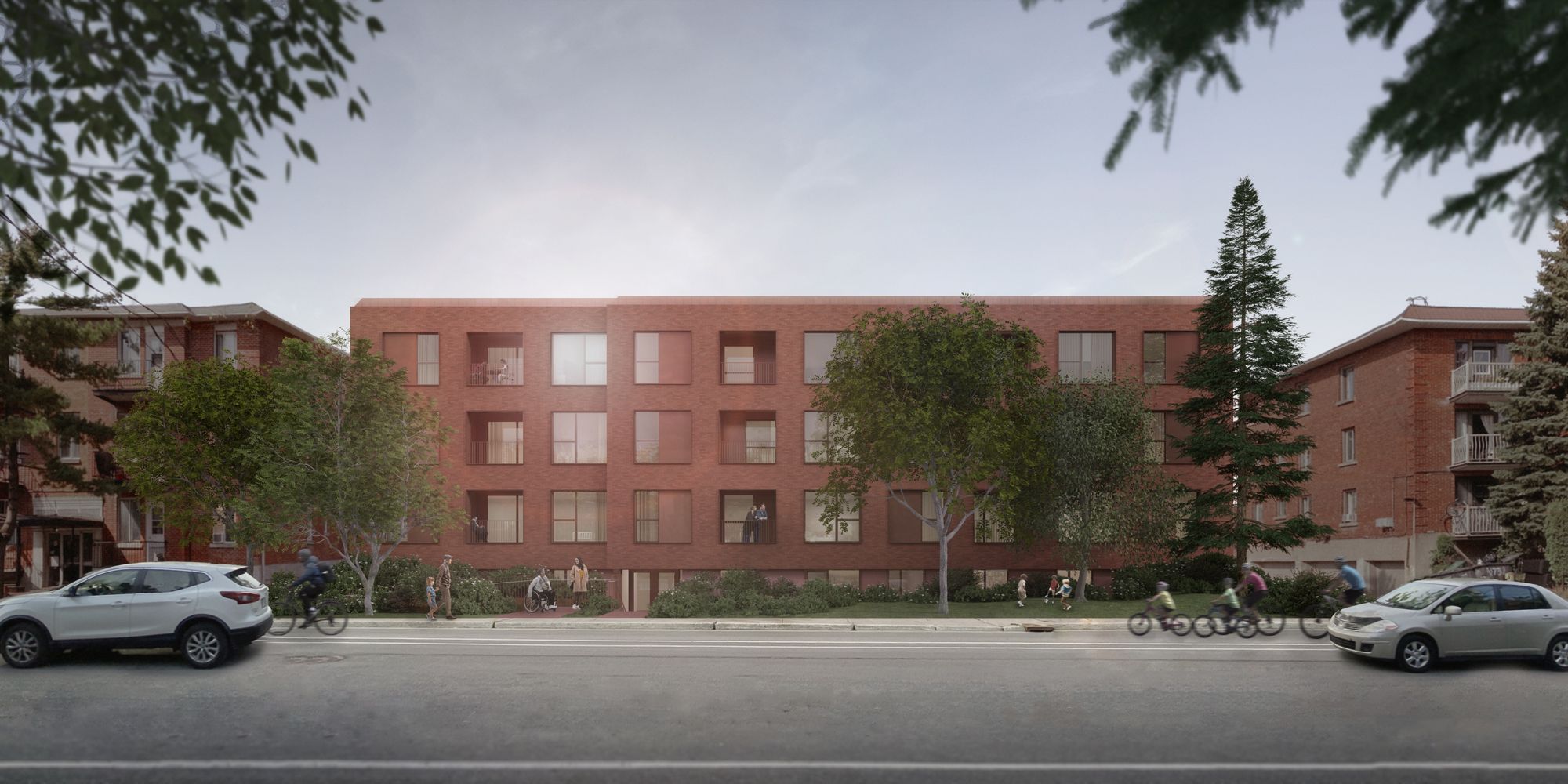
In Québec, social housing includes public and community housing where rents are set based on household income, typically around 25% of earnings. Beyond providing shelter, social housing ensures access to healthy living environments and serves as an essential lever for public health, social cohesion, and territorial equity (INSPQ, 2022).
When these buildings fall into disrepair, due to issues such as mold, overcrowding, thermal discomfort, or poor ventilation, the consequences can be severe: declining health, chronic stress, and heightened residential insecurity. These conditions disproportionately affect low-income households, families, seniors, and immigrant or vulnerable populations, highlighting architecture’s role as a powerful instrument for social change (INSPQ, 2022).
Expertise Built on Experience
Chevalier Morales brings over twenty years of experience in social housing, complementing the firm’s work in cultural and public projects. Our portfolio spans more than 250 mandates, including new construction, major renovations, asset maintenance, studies, and technical expertise, across Montréal and the wider metropolitan area.
Early collaborations with housing cooperatives in communities facing precarity shaped our approach, positioning us as a trusted partner capable of translating real needs into effective architectural solutions. This experience has shaped a proactive, rigorous methodology grounded in a commitment to social equity.
Over the years, we have supported numerous clients on complex mandates, from envelope repairs to full-scale redevelopment, as well as new multi-unit residential construction. Each project an opportunity to generate improvements in safety, performance, sustainability, and quality of life for vulnerable communities.
Essential Architecture
The Montréal Municipal Housing Office’s (OMHM) central mission is to improve the living conditions of low-income households through quality housing and accessible services. For Chevalier Morales, contributing to this mission through architecture is a responsibility we fully embrace. Our social housing projects hold value equal to that of our cultural work, impacting the daily lives of hundreds of residents.
Every detail, from thoughtful section cuts and high-performance building envelopes to luminous circulation and effective ventilation, helps create living spaces that promote both physical and mental well-being. This type of architecture, though often discreet, is fundamental in promoting health, dignity, a sense of belonging, and residential stability.
By investing resources and expertise in social housing, Chevalier Morales affirms that equitable and sustainable architecture is a cornerstone of social and climate transition, where technical expertise meets collective responsibility.
Concrete Impacts Across Three Projects
Renovate to Sustain: Habitations de l’Érablière
Renovating existing buildings reduces the carbon footprint associated with demolition and reconstruction while preserving established social networks and community ties. Asset maintenance projects are crucial to modernizing thousands of social housing units across Québec, protecting both affordability and housing diversity.
The renovation of Blocks B & C at Habitations de l’Érablière aimed to modernize the visual appearance and ensure the structural integrity of building façades as part of a comprehensive maintenance plan. Key interventions included masonry repair; replacement of doors, windows, roofing membrane, guardrails, and handrails; and reconstruction of certain exterior brick walls, notably around emergency staircases. While often technical and invisible, these works are essential to resident safety, sanitary conditions, and long-term maintenance.
Designing from the Inside Out: Habitations des Neiges
Born from a long-standing collaboration with OMHM, the Habitations des Neiges project, in Côte-des-Neiges–Notre-Dame-de-Grâce, demonstrates the potential of new construction amid Montréal’s current social housing shortage. The three-story building contains 31 affordable units, including accessible and family units.
From the earliest sketches, the project was designed from the inside out. Prioritizing unit diversity, universal accessibility, and high-quality common spaces, the building fosters dignity and social diversity. The exterior features a nuanced palette of plum, ruby, and burgundy bricks, integrated seamlessly into Barclay Avenue, with metal screens adding depth and richness to the façade.
Technical Expertise and Urban Equity: Habitations Jarry
The Habitations Jarry project highlights another critical dimension of social housing: risk management, safety, and urban intervention in a complex context. In 2017, Chevalier Morales conducted a detailed technical assessment of the masonry on this 1978 tower, quickly revealing that the degraded façade no longer ensured resident or property safety.
In collaboration with structural engineers, we recommended a full envelope rehabilitation. Beyond technical challenges, the project carried a deeply social dimension, as residents of low-cost housing often have a limited ability to relocate. A key challenge was therefore to complete the work without relocating residents; careful phasing allowed households to remain in place throughout construction.
The interventions improved thermal and acoustic comfort, reduced energy costs, and lowered the building’s carbon footprint, while improving residential stability and strengthening the resilience of Montréal’s public housing stock. Additionally, deep envelope upgrades were shown to reduce greenhouse gas emissions by approximately 30%, lower energy costs by around 20%, and significantly increase fresh air intake (Fonds municipal vert, 2025).