Architecture and Mental Health: Designing for Well-Being
2026.05.07
May marks Mental Health Awareness Month, an opportunity to reconsider mental health not only as an individual experience, but also as a condition shaped, in part, by the environments we inhabit. These spaces influence our ability to focus, regulate stress, connect with others, and navigate the world.
To mark this moment, we looked to three projects to explore how architecture can meaningfully contribute to collective well-being, and the role architects and designers can play in shaping healthier, more inclusive, and more supportive environments. Through them, we examine how access to natural light, social infrastructure, third places, and restorative environments can play a measurable role in well-being.
Light as a driver of well-being
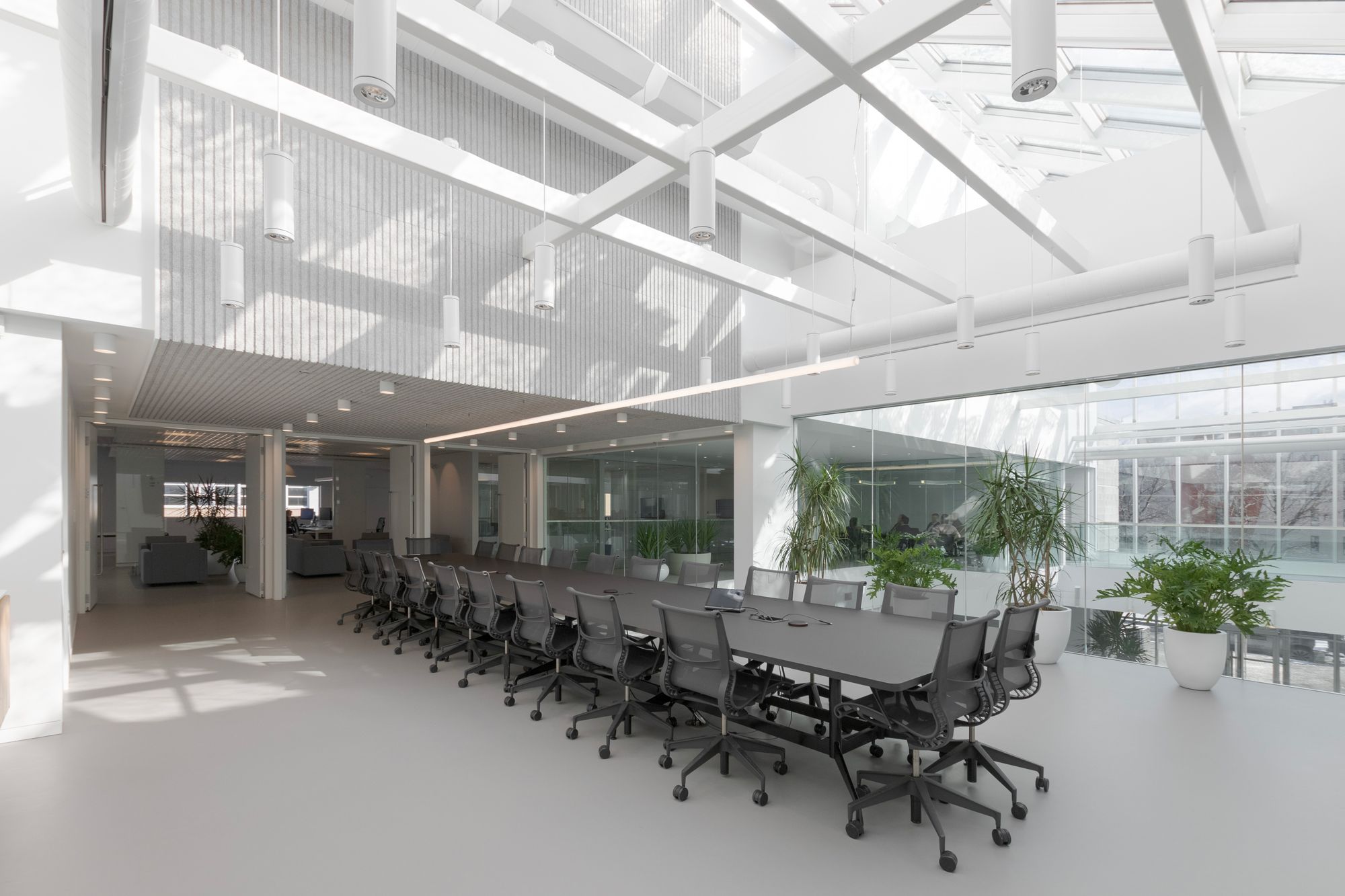
At the Fondaction head office, well-being begins with one of architecture’s most fundamental elements: light.
Not as a decorative gesture, but as a design tool with tangible effects on both body and mind. Daylight acts as a physiological support system, influencing circadian rhythm, mood, and cognitive performance. According to the World Green Building Council, employees working in environments with strong access to natural light report up to 15% higher well-being and 6% greater productivity.
At Fondaction, strategic openings in the building envelope bring daylight deep into circulation spaces, supporting movement, informal interaction, and more flexible ways of working. This natural light is complemented by circadian lighting and responsive mechanical systems that adjust throughout the day to ensure optimal comfort and air quality. In a hybrid work context, the office becomes more than a place of productivity, it becomes a space of lasting comfort, designed for well-being.
Architecture as social infrastructure
At the new Saskatoon Central Library, the built environment functions as both social infrastructure and a third place.
Mental health is shaped not only by internal conditions, but also by access to support, to community, and to spaces where care feels attainable and safe. Designed as an open and inclusive civic space, the library extends beyond its traditional role to integrate services related to housing, crisis support, mental health, and social assistance. According to the American Library Association, public libraries remain among the few civic spaces where support can be accessed freely, informally, and without stigma.
Spaces that reduce isolation and facilitate access to psychological and social support are not simply functional, they help sustain essential conditions for well-being. In this context, architecture contributes to shaping the conditions that support collective life.
Cultural spaces as environments for restoration
Support for well-being is not always clinical. At times, it takes the form of restoration, silence, and reflection. At Maison de la littérature, architecture frames culture as refuge.
Set within the former Wesley Temple in Old Québec, the project transforms a historic place of gathering into a contemporary cultural space dedicated to literary life. Part public library, part venue, part creative workspace, it offers spaces to read, write, reflect, and connect. Its open and layered program supports a wide range of experiences, from solitary reflection to collective gathering, performance, and dialogue.
Research continues to show that access to restorative cultural environments can reduce mental fatigue, support psychological recovery, and strengthen a sense of belonging. In this context, culture is not peripheral to well-being, it's one of the ways it is sustained.
Together, these projects highlight that architecture is not only a spatial discipline, but also a form of civic infrastructure capable of supporting healthier and more resilient communities.