Materials and identity
2025.08.07
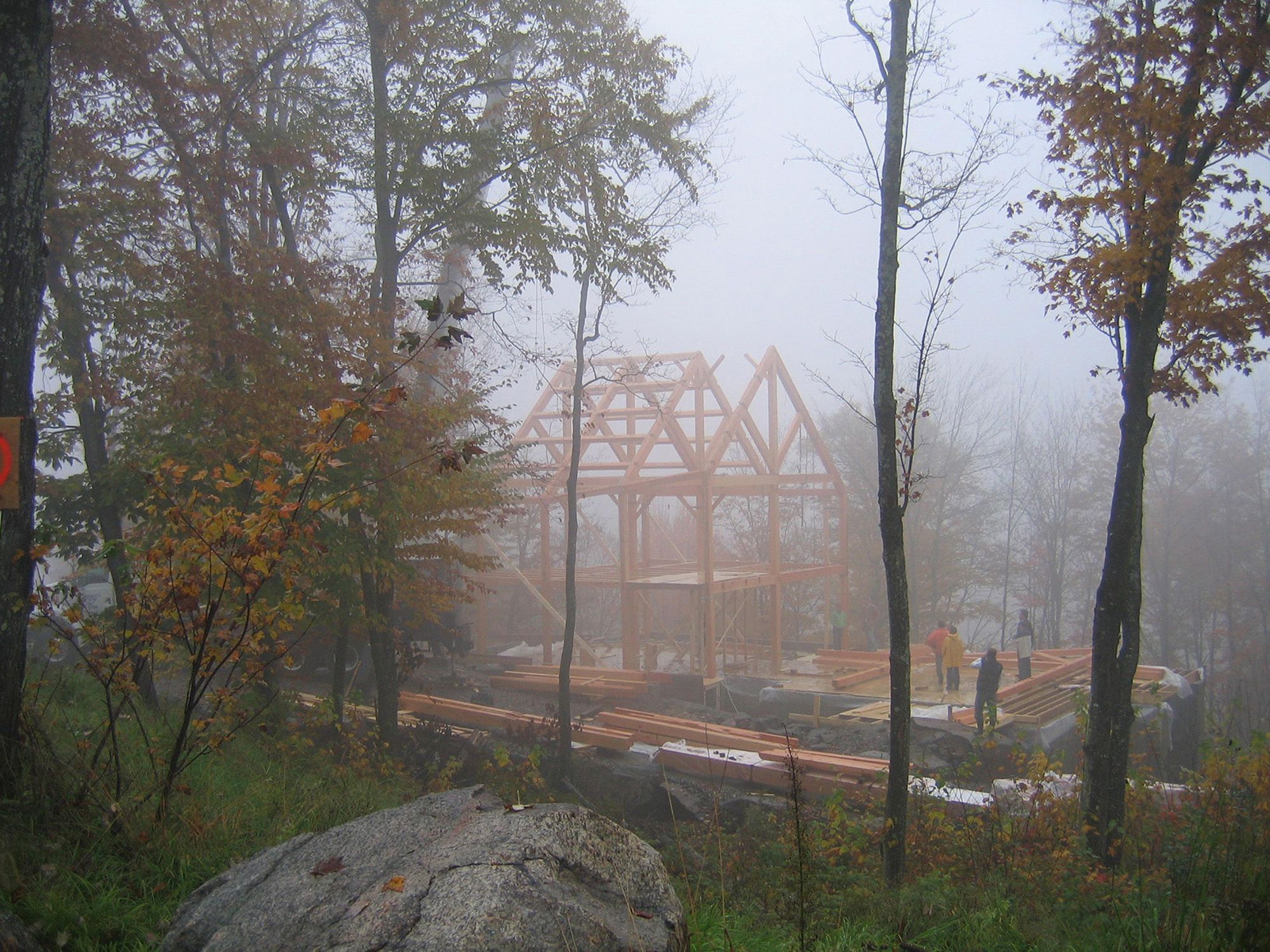
Wood stands as a cornerstone of Quebec’s architectural heritage, intimately connected to both our construction traditions and the character of our built landscape. Today, over 80% of single-family homes in Quebec continue to be built with wood, reflecting a deeply rooted craftsmanship attuned to the region’s unique climatic and cultural conditions (Cecobois, 2024).
As a renewable material, wood embodies continuity—bridging collective memory and contemporary architectural practice. In our work, wood shapes the spaces that resonate with their surroundings, creating a refined balance of simplicity, durability, and cultural identity. It is a material imbued with meaning, central to the essence of our architectural identity.
At the former Notre-Dame-de-la-Protection church in Rouyn-Noranda, the new reception pavilion at the Agora des Arts features a central staircase that becomes an expressive space. Relocated from its original position, the stairs now serve as a focal point within the foyer, its distinct form clearly visible from the street through expansive floor-to-ceiling glass. Its sculptural presence—crafted in solid wood—imbues the space with solemnity and grandeur. The refined textures and lustrous finishes echo the artisanal woodwork of Quebec's religious interiors: pews, pulpits, and confessionals reinterpreted in a contemporary architectural language.
Wood is increasingly recognized as a leading alternative to conventional construction systems. Thanks to engineered products like cross-laminated timber (CLT), it is now possible to build structures up to 18 storeys tall (RBQ, 2023), while cutting the carbon footprint by nearly 45% compared to concrete (FPInnovations, 2022). The Régie du bâtiment du Québec (RBQ) recently issued updated guidelines and regulations for encapsulated mass timber buildings, raising the allowable height from 12 to 18 storeys.
Wood is also lighter, which reduces foundation loads and accelerates construction timelines. Used across residential, institutional, and commercial projects, it meets contemporary demands including energy performance, prefabrication, and reversibility. Our practice emphasizes a strategic and rigorous approach to the material, aligning with the goals of ecological transition and architectural innovation.
Beyond its structural function, wood serves as an atmospheric material—capable of shaping spatial experience in a profound and tactile way. Its textures, tonal variations, and innate warmth contribute to a more sensitive, human-centred architecture.
Within interior spaces, wood fosters environments that are both calming and immersive. Research has demonstrated its positive effects on well-being, including stress reduction and an enhanced perception of air quality (Wood & Human Health Report, 2021). Its relationship with light, along with its natural aging process, makes wood a living material—one that evolves and deepens the character of the space.
Explore our projects featuring prominent wood elements, including the Thibaut Residence in Mont-Tremblant and the Mont-Laurier Library. For full project details, view the complete project sheets here.