The Right to Housing: Building and Preserving
2026.10.05
On World Architecture Day 2026, celebrated on October 5, the International Union of Architects (UIA) invites the profession to reflect on the theme “Housing is a Human Right. Build It.”, in parallel with the United Nations’ World Habitat Day theme, “Adequate Housing for All.” Through this initiative, the UIA seeks to draw attention to a housing crisis affecting cities and communities around the world, and to the role architecture can play in developing sustainable, inclusive and context-responsive solutions.
This reflection has particular relevance in Canada and Montreal. According to the Canada Mortgage and Housing Corporation (CMHC), Canada would need to nearly double its current pace of construction and build between 430,000 and 480,000 homes annually over the next decade to restore housing affordability to 2019 levels.
Across Greater Montréal, affordability remains a significant challenge despite recent growth in rental supply. In 2025, the average rent for a two-bedroom apartment reached $1,346, an increase of 7.2% in one year. CMHC also notes that the most affordable units remain in limited supply and that rent growth has outpaced income growth.
In response to this reality, building more housing is essential. But the housing question cannot be reduced to the number of units created.
What makes housing adequate?
The concept of adequate housing invites us to consider housing beyond availability alone. A home should first provide safe and healthy living conditions while remaining accessible, affordable and responsive to the needs of the people who live there. Natural light, comfort, privacy and the ability to make a space one’s own also contribute to the quality of the living environment.
Location matters just as much. Proximity to public transit, public spaces, shops, community amenities and essential services directly contributes to the quality of everyday life and to the way housing connects with its broader surroundings.
These considerations become particularly important when architecture serves people experiencing vulnerability or economic precarity. In such contexts, architectural quality extends beyond the expression of a building. It directly affects health, safety, comfort and the ability to live with dignity over time.
Building, while preserving what already exists
Increasing housing supply remains an essential part of the response to the current crisis. CMHC estimates that the pace of housing construction will need to increase substantially over the next decade in order to improve affordability across Canada.
The need to build more, however, should not overshadow the importance of the existing housing stock. Rehabilitating a building rather than demolishing it can help preserve housing that is already embedded within its neighbourhood while improving building performance and living conditions. Envelope rehabilitation, improved ventilation, the correction of deterioration issues or the adaptation of a building to contemporary needs may be less visible than new construction, but their impact on safety, health, comfort and long-term durability can be substantial.
In social and affordable housing, this responsibility often carries an additional dimension. Work may need to be carried out while residents continue to occupy the building. Construction phasing, safety and coordination therefore become critical aspects of the project, helping to limit disruption and displacement for residents. This reality encourages us to consider existing housing as essential social infrastructure whose value must be sustained over time.
Across many of our projects, this responsibility takes different forms depending on the building, its context and the needs of it's users.
Habitations Jarry: extending the life of existing housing
At Habitations Jarry, our intervention focuses on the complete rehabilitation of the envelope of a social housing tower built in 1978.
Following a technical assessment of the masonry, the level of deterioration of the exterior cladding led to the recommendation of a complete envelope rehabilitation. Beyond the technical challenges involved, enabling residents to remain in their homes throughout the work was an important consideration.
The project was therefore carefully phased to allow tenants to remain in place during construction. The rehabilitation also aims to improve the performance of the building envelope, as well as residents’ thermal and acoustic comfort.
The project illustrates how an intervention on an existing building can simultaneously improve safety, performance and longevity while responding to the realities of the people who live there.
900 Saint-Jacques: adding housing through urban densification In a different context, the 900 Saint-Jacques tower contributes new housing to downtown Montréal while increasing density in an area already served by urban infrastructure and public transit.
The residential units are designed to respond to a diversity of household needs. Eighteen percent of the units are intended for families, while two- and three-bedroom layouts provide a degree of flexibility as household needs evolve.
Shared spaces also extend residential life beyond the individual unit. A suspended garden, perimeter terrace and other communal areas create opportunities for gathering and strengthen the relationship between the residential environment and its urban context.
In this setting, densification is not simply about increasing the number of units on a site. It also involves considering who can live there, the quality of shared spaces and the role a residential building can play within the life of its neighbourhood.
Outremont Campus: integrating housing into a new urban environment
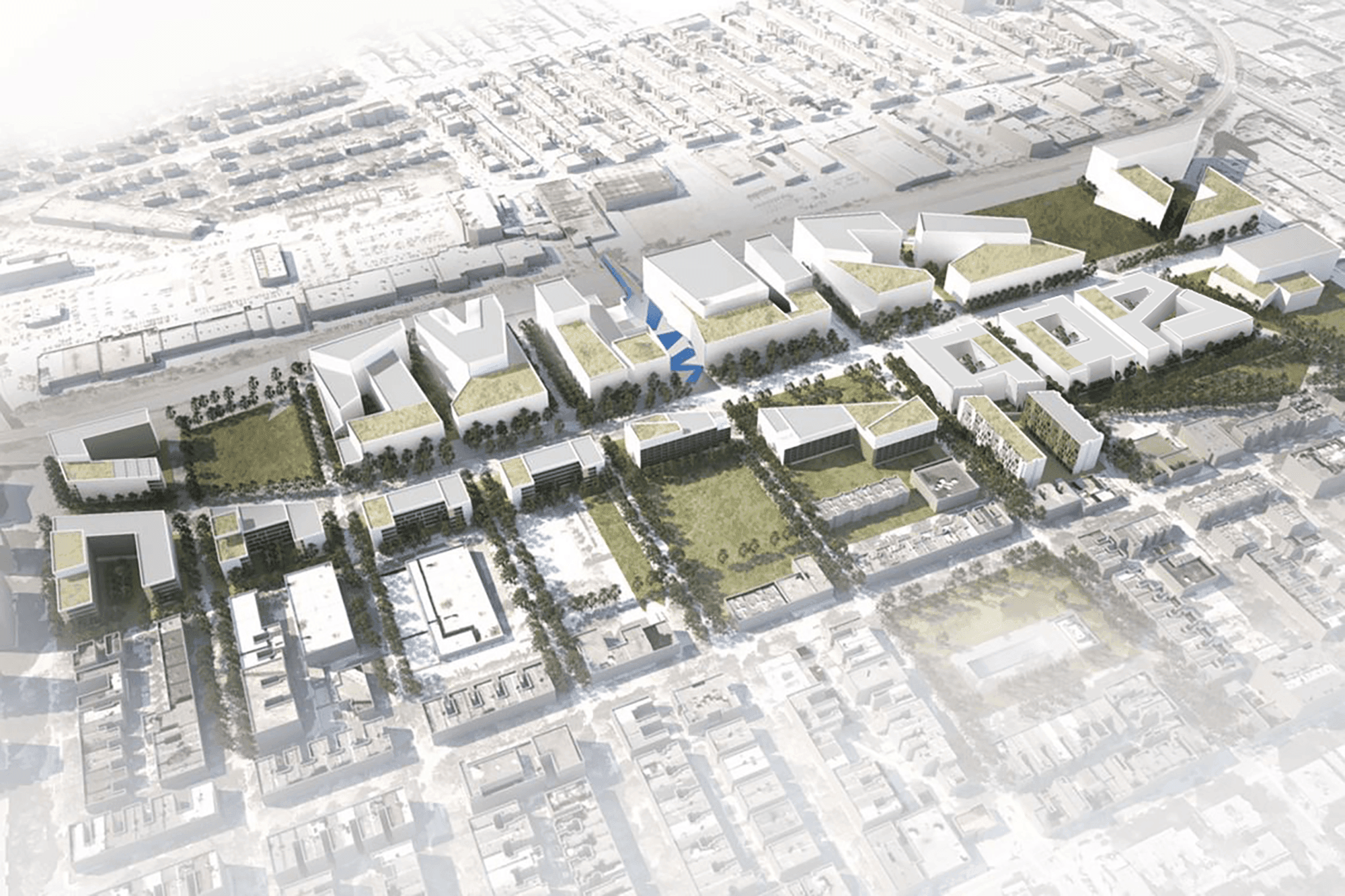
The Outremont Campus project illustrates housing development at the scale of a new neighbourhood. Developed in three phases, nearly 700 rental units, including 20% affordable housing, form part of the broader development of the Université de Montréal’s MIL campus district.
The design places particular emphasis on connections to public spaces, parks, pedestrian and cycling networks and neighbourhood services. Community spaces, shared kitchens, terraces, gardens and areas dedicated to uses such as urban agriculture and bicycle maintenance complement the residential program.
The project demonstrates how housing quality can also be understood at the neighbourhood scale. Access to services, mobility infrastructure and collective spaces becomes part of the living environment just as much as the residential unit itself.
Architecture’s role within a broader collective challenge Architecture alone cannot solve the housing crisis. Affordability is shaped by many factors beyond the design of a building, including land costs, financing, public policy, ownership and management models, construction capacity and regulation.
The architect’s role is therefore situated within a broader ecosystem, working alongside public, community and private-sector partners involved in the creation, transformation and long-term stewardship of housing. The UIA similarly emphasizes that the profession’s contribution extends beyond design to include research, knowledge sharing and broader participation in discussions surrounding access to housing.
This contribution may take the form of new construction that makes more efficient use of existing infrastructure, the rehabilitation of a building to extend its useful life, or an intervention that strengthens the relationship between housing and the surrounding neighbourhood.
It also involves assessing the transformation potential of existing buildings, making thoughtful use of available resources and designing environments capable of evolving alongside the people who inhabit them. At a time when significantly more housing is needed, questions of quality therefore remain inseparable from those of quantity. Ensuring the right to adequate housing for all means creating new places to live but also preserving and improving those that already exist.
As housing needs continue to grow and evolve, how else can we build more while ensuring the quality, longevity and dignity of the places we create and transform?